30% off today$16.95 $11.86·ends tonight
☰✕
Documents
US passport photo2×2 inUSCIS photoGreen card photoUS visa photoDigital photoonline renewalBaby passport photoRequirements
US passport photo requirementsPhoto examples that passFree photo checkerSize & dimensionsBackground rulesGlassesGuides
All passport & visa guidesHow long it actually takes to get a passportRenewing your passport by mail, step by stepApplying for your first passportExpedited passports, honestly explainedWhat a passport actually costsHow it works
How we verifyPricing$11.86Where to get oneMoney-back guaranteeBaby & Infant Passport Photo: how to take one that passes
Babies are the hardest passport photos to get right — no hands may show, the background must be plain, and a wriggling infant will not hold a pose for a drugstore clerk. The good news is that a phone and a white sheet beat a photo counter here, because you can take fifty attempts instead of one.
 ✓
✓ ✕
✕See all 6 examples
The white sheet method
01
Lay them on a plain white sheet
A bed or the floor with a smooth white sheet, no pattern or creases. Photograph from directly above, holding the phone parallel to their face rather than at an angle.
02
Use daylight, never flash
Near a window on an overcast day is ideal. Flash causes red-eye and hard shadows behind the head, and shadows behind the head are a rejection reason.
03
Nobody else in frame
No hands steadying the head, no arm at the edge of the shot. If they cannot hold their head up yet, the sheet does the supporting.
04
Get their attention above the lens
Have someone stand behind you and make a noise so the baby looks up toward the camera with their eyes open. Their face should point straight at the lens.
05
Take far more shots than you think
Twenty is not excessive. You need one frame with eyes open, face forward and no hands — the odds improve enormously with volume, and retakes here are free.
Baby photo examples: what passes and what does not
The failures below are the ones parents actually make — a steadying hand at the edge of frame, a pacifier, a toy held up to keep them calm.
Photos that pass
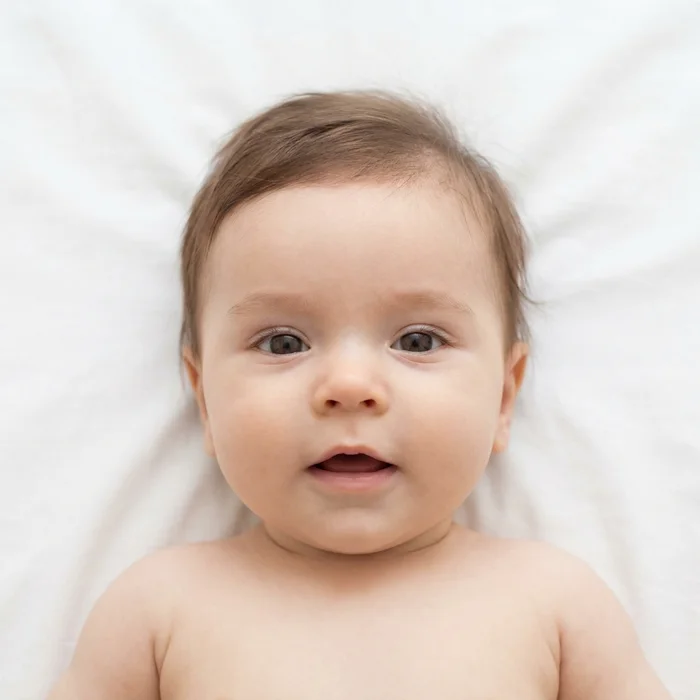
✓ PassesAcceptable — the white sheet method
Laid on a smooth white sheet and photographed from directly above. Eyes open, nobody else in frame, no shadows. An open mouth is fine at this age. This is the technique that works for a baby who cannot sit up yet.
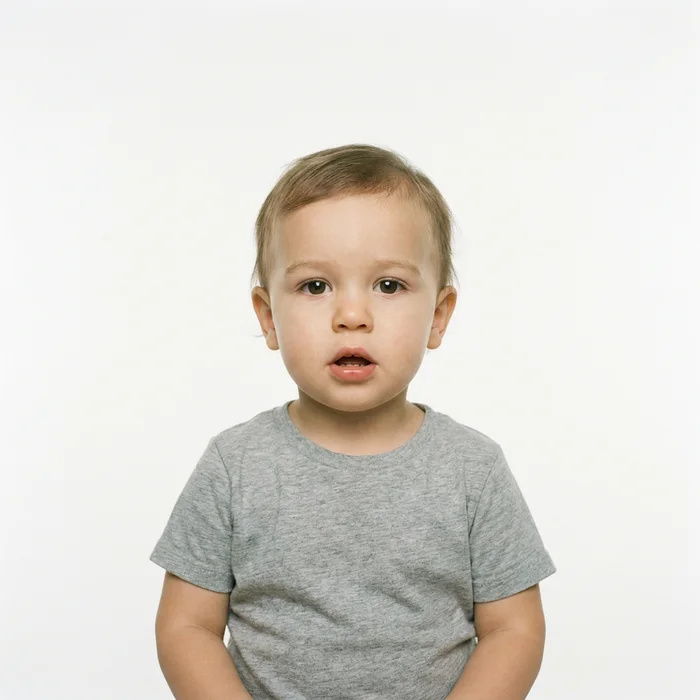
✓ PassesAcceptable — sitting upright
Once a toddler can sit unsupported, the ordinary approach works: plain background, facing the camera, eyes open, nobody holding them.
Photos that get refused
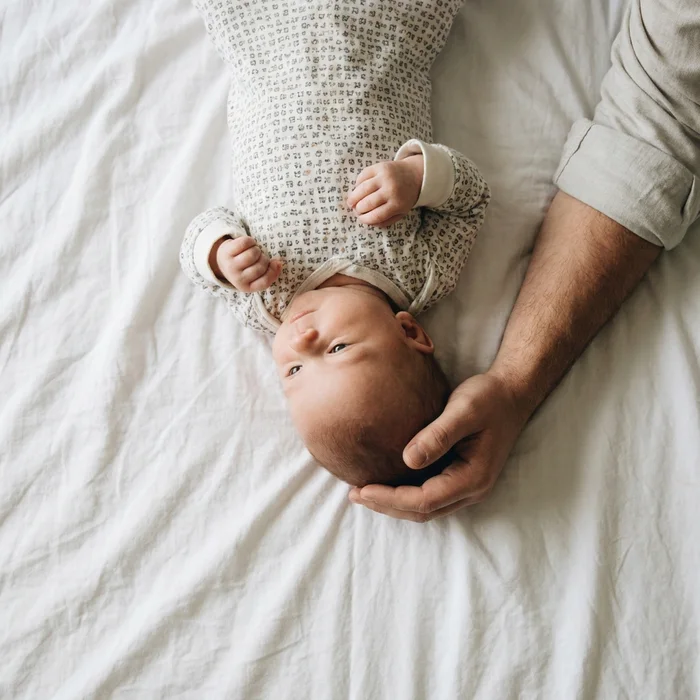
✕ RefusedNot accepted — a hand in the frame
An adult hand is steadying the head at the edge of the photo. Nobody else may appear, and this is the single most common reason infant photos are refused. Let the sheet do the supporting instead.
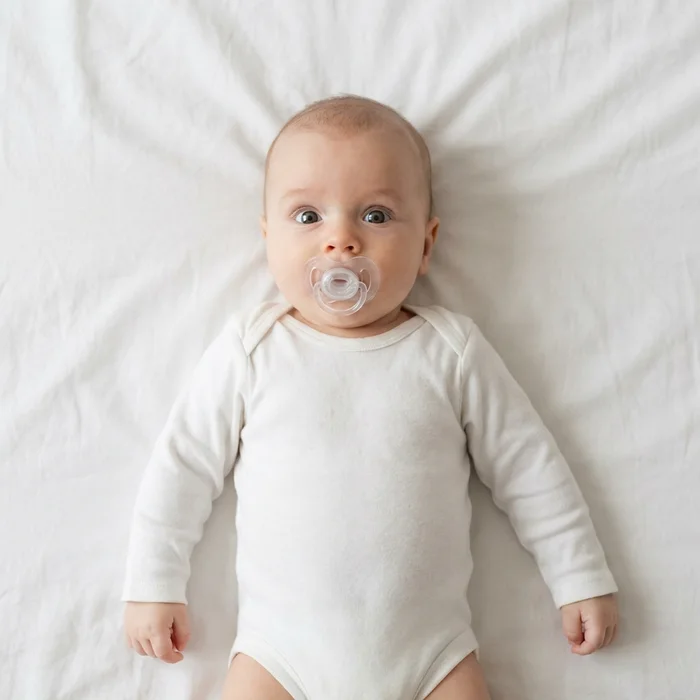
✕ RefusedNot accepted — pacifier
A dummy, bottle or anything else in the mouth is refused, even though an open mouth on its own is perfectly acceptable for an infant.
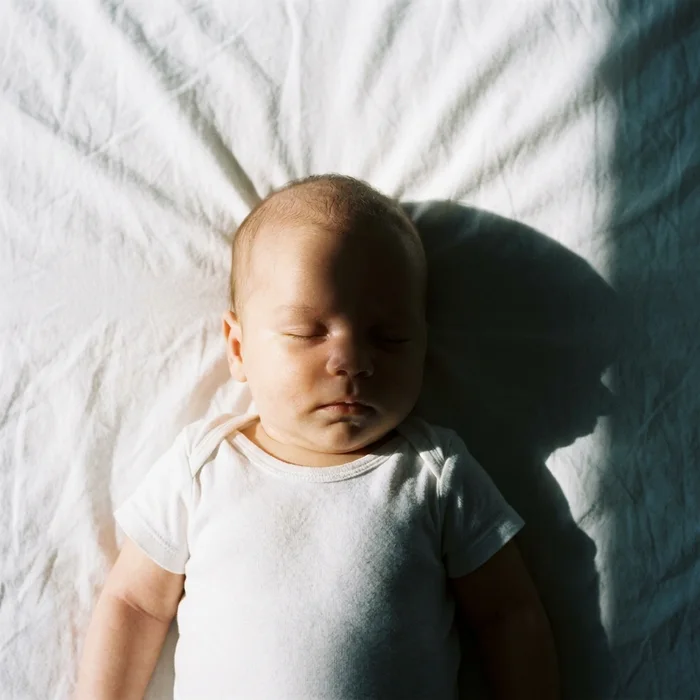
✕ RefusedNot accepted — shadow across the face
Hard directional light has thrown a shadow over half the face and onto the sheet. Photograph near a window on an overcast day, and never use flash.
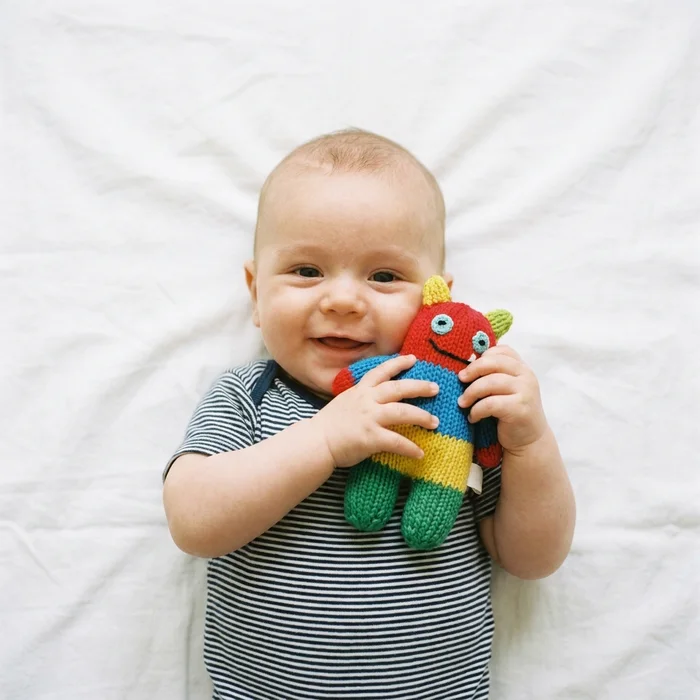
✕ RefusedNot accepted — toy in shot
A comforter or toy held up to keep the baby calm ends up in the frame. Nothing but the child may appear in the photo.
Illustrative examples — the children shown are AI-generated, so no real child appears here as a rejected photo.
What is relaxed for babies — and what is not
| Rule | For a baby |
|---|---|
| Neutral expression | Relaxed — an open mouth is fine |
| Eyes open | Allowance made for newborns; required as they get older |
| Nobody else in frame | Strict — no supporting hands, ever |
| Plain background | Strict — a white sheet works |
| No pacifier or toys | Strict |
| Photo size | Identical to adults: 2 × 2 in, head 1 – 1⅜ in |
Upload your best shot — free to check
We replace the background, crop to exactly 2 × 2 inches with the head at the right size, and show you the full report before you pay. We apply the infant rules automatically: an open mouth is fine, and closed eyes are flagged as a warning rather than a failure.
Check the photo freeFrequently asked
Does a baby need their eyes open in a passport photo?+
The State Department asks for eyes open, but makes an allowance for newborns, where it is accepted that this is not always possible. For older babies and toddlers the eyes do need to be open and visible, which is the main reason these photos get retaken.
Can my baby's mouth be open?+
Yes. The neutral-expression rule is relaxed for infants — an open mouth is fine. What is not allowed is a pacifier, a bottle, a toy, or anything else in the frame.
Can I hold my baby for the photo?+
No. Nobody else may appear in the photo, and that includes a hand supporting the head. The standard workaround is to lay the baby on a plain white sheet and photograph from directly above, so the sheet supports them instead of you.
Does a newborn need their own passport photo?+
Yes. Every US passport applicant needs their own photo regardless of age, including newborns, and children cannot travel on a parent's passport.
What size is a baby passport photo?+
Exactly the same as an adult one: 2 × 2 inches, with the head measuring 1 to 1⅜ inches from chin to the top of the head. Babies have proportionally larger heads, so the framing is usually looser than parents expect.
Rules follow the U.S. Department of State photo requirements, last checked August 2026. Final acceptance is always decided by the issuing authority.