30% off today$16.95 $11.86·ends tonight
☰✕
Documents
US passport photo2×2 inUSCIS photoGreen card photoUS visa photoDigital photoonline renewalBaby passport photoRequirements
US passport photo requirementsPhoto examples that passFree photo checkerSize & dimensionsBackground rulesGlassesGuides
All passport & visa guidesHow long it actually takes to get a passportRenewing your passport by mail, step by stepApplying for your first passportExpedited passports, honestly explainedWhat a passport actually costsHow it works
How we verifyPricing$11.86Where to get oneMoney-back guaranteeUS Passport · 2×2 inches · 1200×1200 pixels
US Passport Photo Online
Applying for or renewing a US passport? Upload a phone photo taken from six feet or so away and get a fully compliant 2×2 inch photo in about a minute — digital file and printable sheet included.
Take or upload a photo✓Guaranteed accepted — or your money back
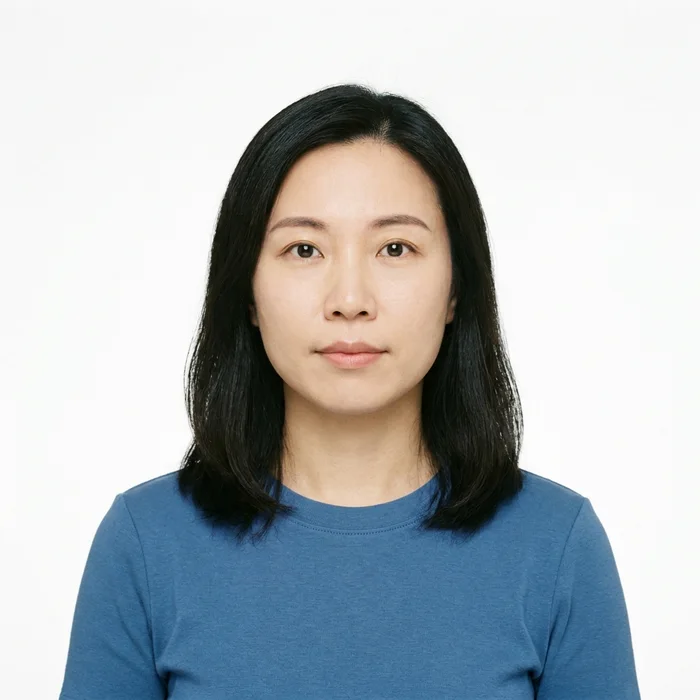 ✓
✓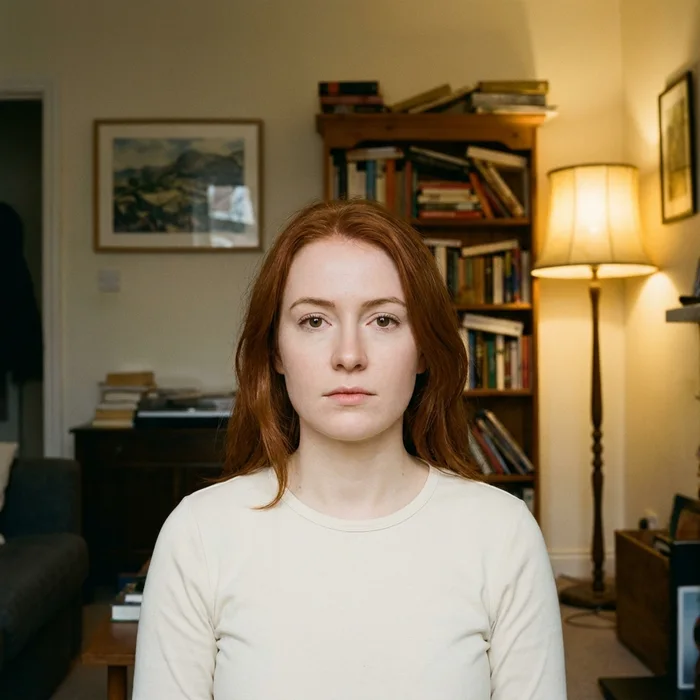 ✕
✕See all 10 examples
Official US passport photo requirements (51×51 mm)
| Size | 2×2 inches (51×51 mm); digital 600×600 to 1200×1200 pixels |
| Head height | 1 to 1⅜ inches from chin to top of hair (50–69% of the frame) |
| Eye position | 1⅛ to 1⅜ inches from the bottom of the photo |
| Background | Plain white or off-white, no shadows or patterns |
| Expression | Neutral or natural closed-mouth smile, both eyes open |
| Glasses | Not allowed since 2016, except with a signed medical statement |
| Recency | Taken within the last 6 months |
| Attire | Everyday clothing; no uniforms; head coverings only for religious or medical reasons |
How to take your own US passport photo
There is no requirement to use a professional. What the State Department cares about is whether the finished photo meets the specification — not who pressed the shutter. The practical difficulty is that a phone photo taken the way people normally take them fails on three counts at once: distance, background and lighting.
Distance first. Hand the phone to someone and have them stand about six feet away, then zoom slightly if the framing looks loose. That distance matters more than anything else you will do: a phone at arm's length sits 40–50 cm from your face and visibly enlarges the nose while narrowing the ears, which is the distortion behind the official instruction not to submit a selfie. No amount of cropping undoes it. If you are alone, prop the phone against something at the same distance and use the timer.
Then the background. Stand at least two feet in front of a plain, light-colored wall — the gap is what stops your own shadow landing on it. If you have no suitable wall, it matters less than you think, because our processing replaces the background entirely. What it cannot fix is a shadow that has already fallen across your face.
Finally the light. Face a window on an overcast day and you are done. Avoid direct sun, avoid overhead ceiling lights that pool shadows under the eyes and nose, and never use flash — it causes red-eye and throws a hard edge onto the wall behind you.
What to wear — and the white shirt trap
Everyday clothing is expected and no dress code applies. The prohibitions are narrow: no uniforms, nothing resembling a uniform, and no camouflage even worn casually.
The color question is the one people actually get wrong. Because the background must be white or off-white, a white top merges into it and leaves your outline undefined — technically compliant, visually poor, and a common reason a reviewer looks twice. Mid-tone colors separate cleanly. Black is permitted but can read heavy against white.
Jewellery and everyday piercings are fine provided nothing obscures your face; the practical risk is large earrings casting shadows on the cheek. Makeup is unrestricted, though heavily reflective foundation can read as glare under direct light.
Is a US passport photo 2×2 inches?
Yes — 2 × 2 inches exactly, which is 51 × 51 mm. The US is one of the few countries using a square format; most of Europe uses 35 × 45 mm, which is why photos taken abroad are frequently the wrong shape.
Within that square, your head must measure between 1 and 1⅜ inches from the bottom of the chin to the top of the hair — not the top of the skull, which is why voluminous hair pushes you toward the upper limit. Your eyes should sit between 1⅛ and 1⅜ inches from the bottom edge.
For the digital file, the State Department accepts between 600 × 600 and 1200 × 1200 pixels. We produce 1200 × 1200 — the maximum allowed — because the same file also has to survive being printed at 2 inches wide, and 600 × 600 is only 300 dpi at that size.
What happens after you submit it
Your photo is not checked at the moment you submit. It is checked when a person processes the application, usually several weeks later, and that gap is what makes a bad photo costly rather than merely annoying.
A failed photo suspends the application rather than refusing it. You get a letter asking for a replacement, you send one, and the clock restarts from there — commonly adding a month or more. Paying for expedited processing does not protect you, because the delay happens before the expedited clock becomes relevant.
Online renewal gives faster but shallower feedback: the portal validates dimensions and file format at upload, so it rejects a photo of the wrong shape immediately. A correctly-shaped photo with the head slightly out of band passes upload and fails later at the same human step.
The mistakes that cause most rejections
In rough order: the background, which picks up furniture, doorframes or a color cast from indoor lighting. Then shadows — under the nose from ceiling lights, or on the wall from standing too close to it.
Then framing, which is the one people are least aware of, because a head that looks correctly sized on a phone screen is frequently under the 1-inch minimum. Then the rules about you rather than the photo: glasses, teeth showing, eyes narrowed against bright light.
Almost all of these are decided before you press the shutter, which is why the useful advice is about where you stand and what the light is doing, rather than about editing afterwards.
Photos for children, babies and visas
Every applicant needs their own photo regardless of age — children cannot travel on a parent's passport, and a newborn needs one too. The size and head-height rules are identical to an adult's, which surprises parents because babies have proportionally larger heads and the framing ends up looser than expected.
Two rules relax for infants: the expression requirement does not apply, so an open mouth is fine, and newborns are not expected to open their eyes on cue. Two never relax — nobody else may appear in the frame, which rules out a hand steadying the head, and nothing may be in shot, which rules out pacifiers and toys. The practical technique is to lay the baby on a plain white sheet and photograph from directly above.
US visa photos use the same 2 × 2 inch format and the same rules, so a compliant passport photo works for a visa application as well. Photos for other countries usually do not: most of Europe uses 35 × 45 mm, and France and the Netherlands require a light gray background rather than white.
Head coverings, religious dress and medical exemptions
Head coverings worn daily for religious or medical reasons are permitted, and you do not need to remove them. You do need to include a signed statement with your application explaining why it is worn — this is not something you assert on the form itself.
The covering must not obscure any part of your face, and it must not cast a shadow. Your full face has to be visible from the bottom of the chin to the top of the forehead, which in practice means adjusting the fabric back from the hairline before the photo rather than after.
Hats and fashion headwear are refused with no exception. Wigs, hair extensions and cosmetic changes you wear every day are entirely fine — the standard is that the photo should look like you normally look.
Renewing online or applying on paper?
These need different things, and knowing which you are doing before you start saves a second attempt.
Online renewal, available if your most recent passport meets certain conditions, requires a digital photo uploaded into the application. The portal runs automated checks on it and refuses files that are the wrong shape, too small, or visibly edited.
A paper application needs a printed 2 × 2 inch photo on photo-quality paper — matte or glossy, never ordinary office paper. Do not staple it, paperclip it or write on the back; a ballpoint indentation through to the front is enough to get it refused.
You receive both from us: the digital file for the portal, and a 6 × 4 inch sheet at 600 dpi you can print at any kiosk for about 35¢.
What passes and what gets refused
Photos that pass
✓ PassesAcceptable
Even frontal lighting, no shadows on the face or the wall, plain white background, neutral expression with the mouth closed, and a mid-tone top that separates cleanly from the background.
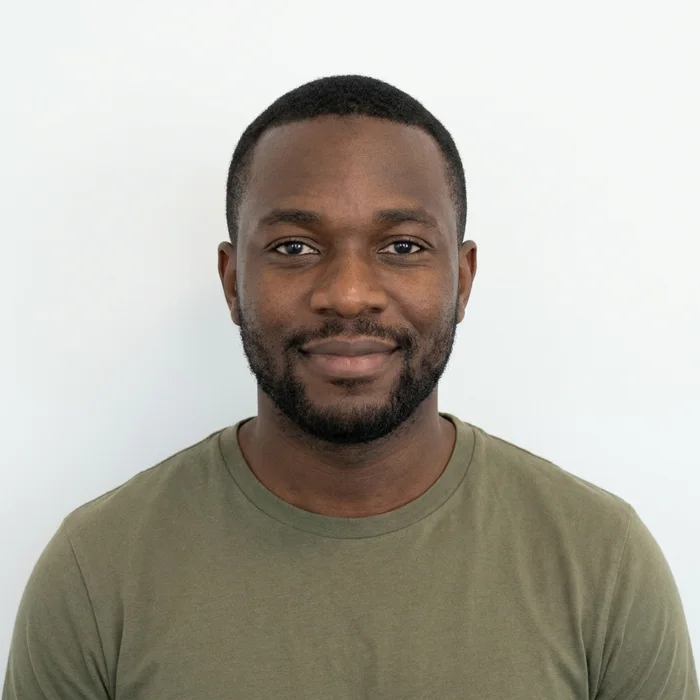
✓ PassesAcceptable
A relaxed, closed-mouth smile is fine — the rule is about teeth and exaggeration, not about looking stern. Lighting is even and the background is plain.
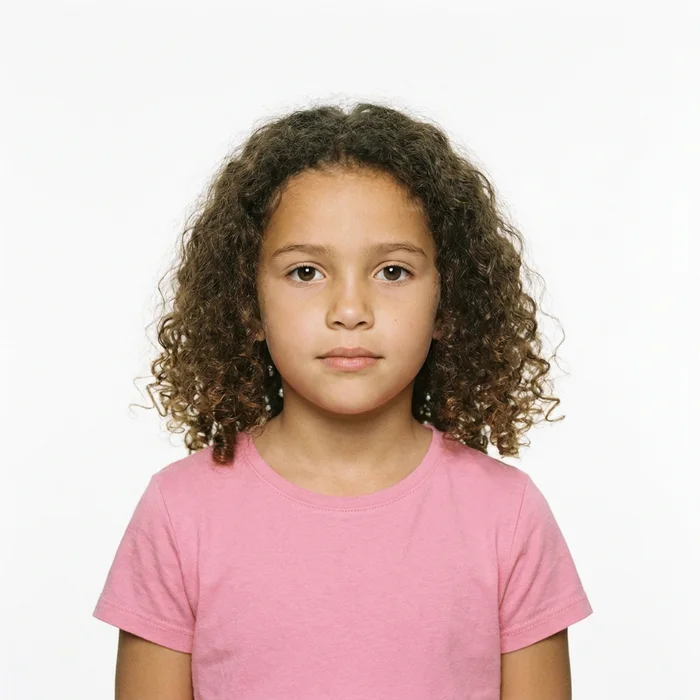
✓ PassesAcceptable
Children follow the same rules as adults once they can sit unsupported: eyes open, facing the camera, plain background, nobody else in the frame.
Photos that get refused
✕ RefusedNot accepted — background
The single most common rejection. A bookshelf, lamp and picture frame are all visible, and the warm indoor light has tinted the wall. The background must be plain white or off-white with nothing behind you.
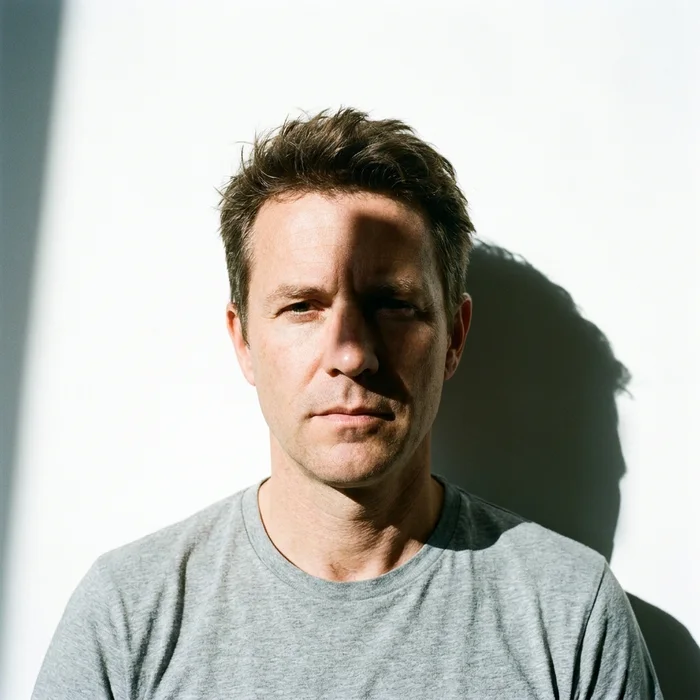
✕ RefusedNot accepted — shadows
Harsh side lighting has thrown a shadow across half the face and a second one onto the wall behind. Both are refused. Face a window on an overcast day, or stand well away from the wall.
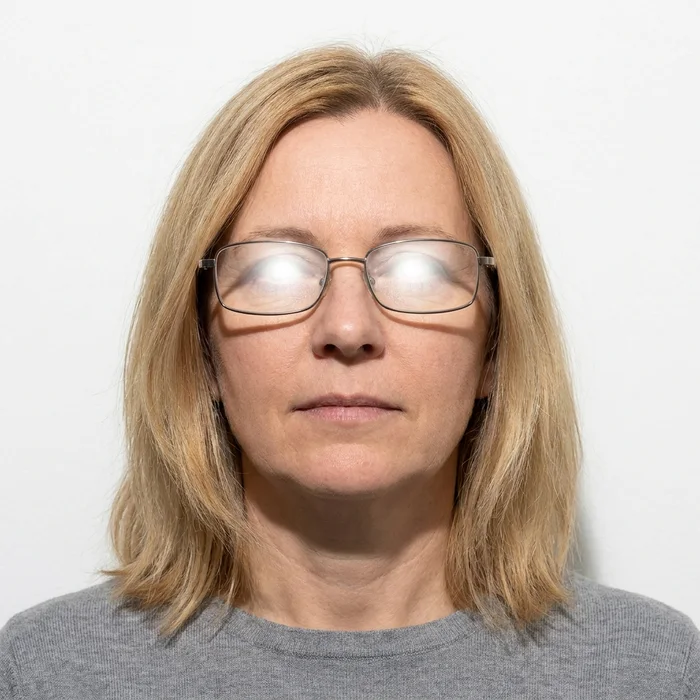
✕ RefusedNot accepted — glasses
Glasses have not been permitted in US passport photos since November 2016, and here the glare is obscuring both eyes anyway — which would fail even in countries that do allow them.
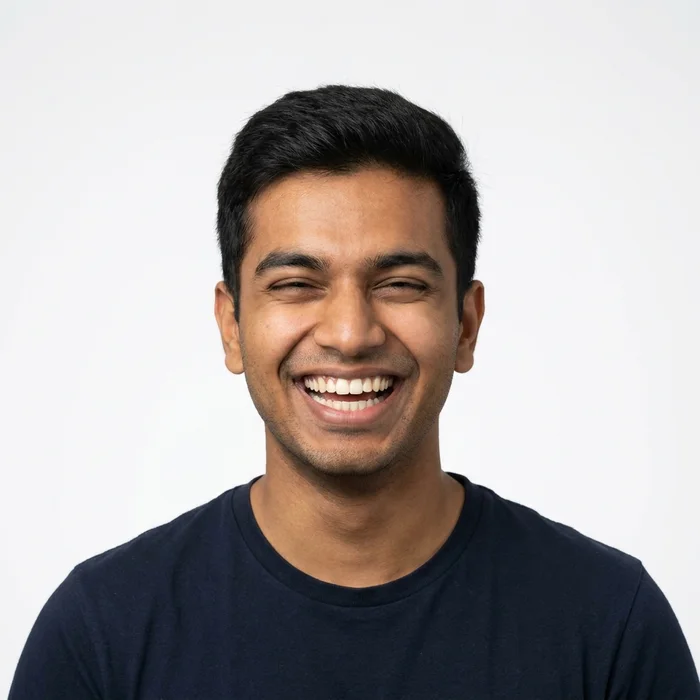
✕ RefusedNot accepted — expression
A broad open-mouthed smile with teeth showing, and the eyes have narrowed from smiling. Biometric matching needs a neutral face with both eyes clearly open.
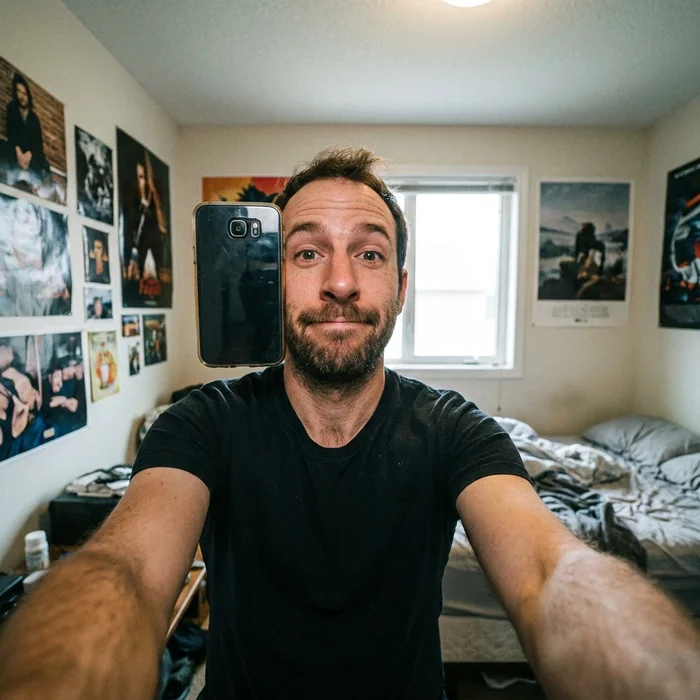
✕ RefusedNot accepted — arm's-length selfie
The phone is far too close, so the nose and forehead are enlarged by lens distortion, and the outstretched arm is in shot. This is why the official checklist says no selfies. Shoot from about six feet instead.
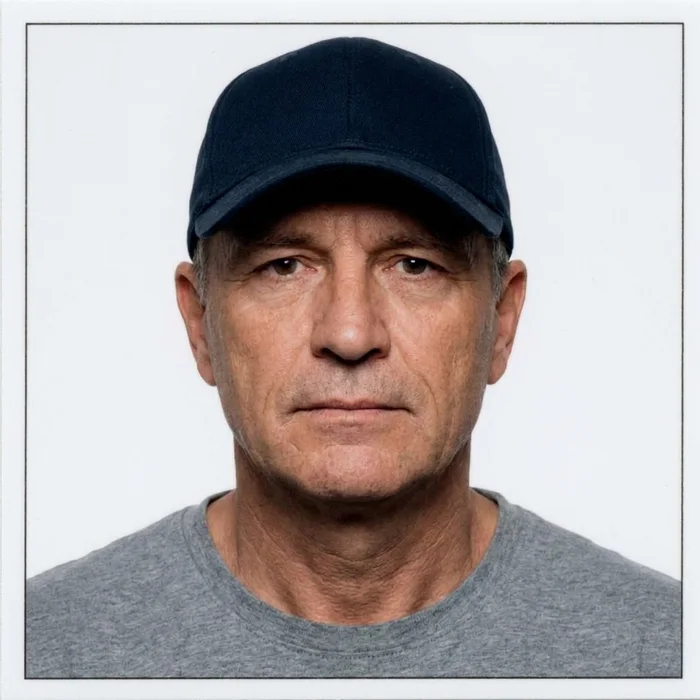
✕ RefusedNot accepted — head covering
Hats are refused outright. Head coverings are permitted only for religious or medical reasons, with a signed statement, and must never shadow the face as this cap does.
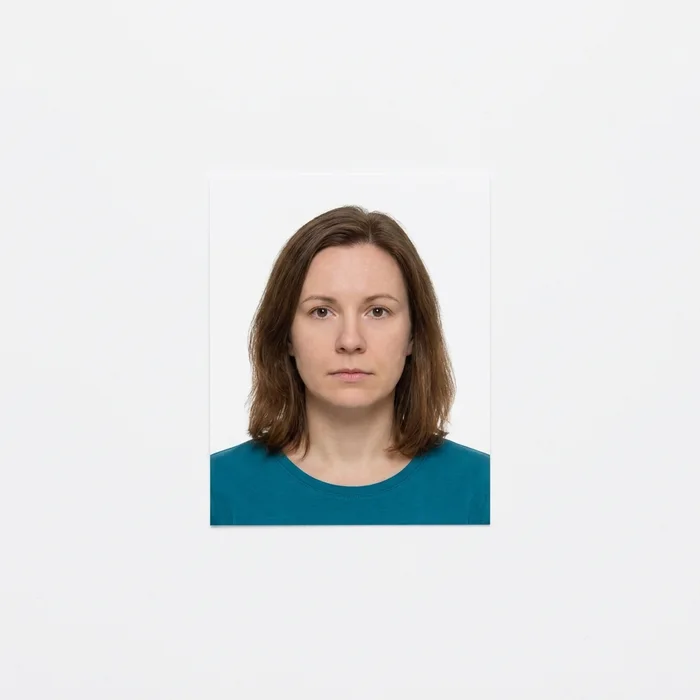
✕ RefusedNot accepted — head too small
Framed too loosely, so the head measures well under the required 1 to 1⅜ inches. Too small is far more common than too large, because people instinctively step back.
Illustrative examples — the people shown are AI-generated, so no real applicant appears here as a rejected photo.
What a US passport photo costs
Drugstore counters run from $7.64 at Walmart to $19.99 at Staples, and most hand you prints only — the digital file needed for online renewal is either an add-on or unavailable. Doing it at home is$11.86 for both files, with unlimited retakes and the compliance report shown before you pay. Compare every option.
Independent service
Our checks follow the official photo requirements published by the U.S. Department of State — Bureau of Consular Affairs. Final acceptance is always determined by the issuing authority — which is why we back every photo with a money-back guarantee.
Frequently asked
Good questions, straight answers
Can I take my own US passport photo?+
Yes. No rule requires a professional photographer — only that the finished photo meets the specification. Have someone shoot it from about six feet away, or use a timer at the same distance, and use the rear camera rather than the front one.
Can I use a selfie?+
The official checklist says no selfies, because a phone held at arm's length distorts your features. A photo you take yourself from a proper distance is judged on how it looks, not on who pressed the button.
Can I smile in my US passport photo?+
A natural, closed-mouth smile is allowed. Teeth showing or an exaggerated expression is not, and squinting from bright light causes the same problem.
What color should I wear?+
Any mid-tone color. Avoid white, which blends into the required white background, and avoid uniforms and camouflage, which are prohibited outright.
Can I use this photo for the online renewal?+
Yes. You get a 1200×1200 pixel JPEG — the maximum resolution the State Department accepts — which is what the online portal requires.
How do I print it?+
You also receive a 6×4 inch sheet at 600 dpi with two photos placed at exactly 2×2 inches and hairline cut guides. Print it at any photo kiosk for about 35 cents.
What if my photo is rejected anyway?+
You get your money back. You also see all eleven checks pass before you pay, so a rejection is not the first you hear of a problem.
Do you keep my photos?+
No. Photos are encrypted in transit, used only to create your passport photo, and deleted automatically within 24 hours.
Your US passport photo, one minute away.
Take or upload a photo$11.86 · verified before you pay · ready in 1 minute