30% off today$16.95 $11.86·ends tonight
☰✕
Documents
US passport photo2×2 inUSCIS photoGreen card photoUS visa photoDigital photoonline renewalBaby passport photoRequirements
US passport photo requirementsPhoto examples that passFree photo checkerSize & dimensionsBackground rulesGlassesGuides
All passport & visa guidesHow long it actually takes to get a passportRenewing your passport by mail, step by stepApplying for your first passportExpedited passports, honestly explainedWhat a passport actually costsHow it works
How we verifyPricing$11.86Where to get oneMoney-back guaranteeNewborn Passport Photo
Short answer
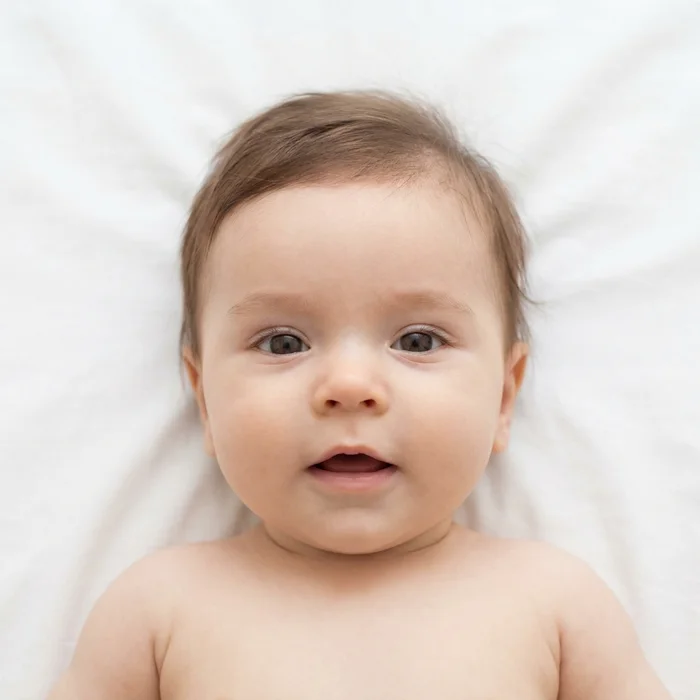
A newborn needs their own passport photo at the same 2 × 2 inch size as an adult. Eyes closed is accepted for newborns, an open mouth is fine, but nobody else may appear in the frame — including a hand supporting the head.
 ✓
✓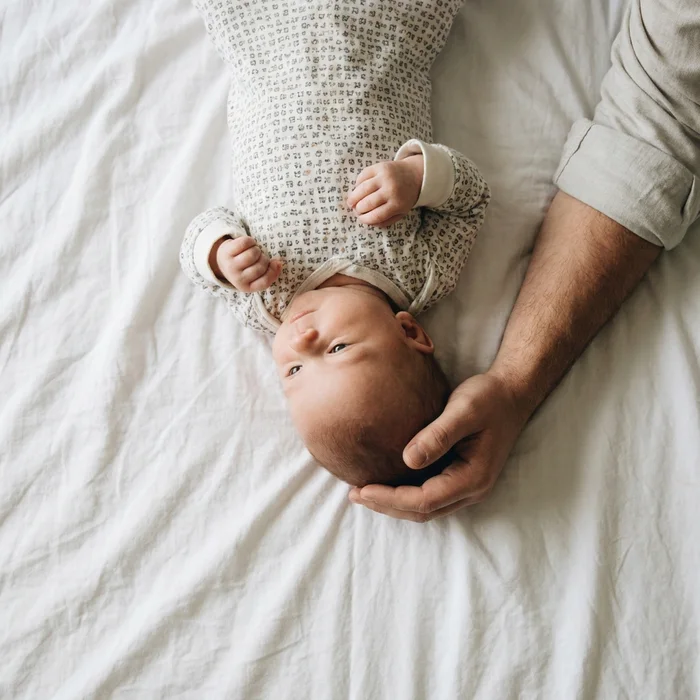 ✕
✕Illustrative examples — the people shown are AI-generated.
The rules that relax, and the one that does not
Newborns get two genuine concessions. The neutral-expression requirement does not apply, so an open mouth is fine. And while the guidance asks for eyes open, an allowance is made for newborns where it is accepted this cannot be arranged on request — a sleeping newborn's photo is routinely accepted.
The rule that never relaxes is that nobody else may appear in the photo. A parent's hand cradling the head, a forearm at the edge of the frame, a shoulder in the corner — all are refusals, and this is overwhelmingly the most common reason newborn photos come back.
Nothing else may be in shot either. No dummy, no bottle, no blanket bunched around the chin, no toy held up to attract attention.
The white sheet method
Lay the baby on their back on a smooth white sheet — a bed or the floor both work — and photograph from directly above, holding the phone parallel to their face rather than at an angle. The sheet does the supporting, which is how you satisfy the no-hands rule without a second person.
Smooth the sheet first. Creases photograph as lines and can read as a patterned background. A plain white cot sheet or a folded flat sheet is ideal; avoid anything with a print, however faint.
Photograph near a window on an overcast day, never with flash. Overhead room lights cast shadows across a face lying flat, and flash on a newborn is both unpleasant and a rejection risk.
Timing it around a newborn
Immediately after a feed, when they are calm and alert but not hungry, is the practical window. A sleeping newborn also works given the eyes concession, and is often easier.
Take far more frames than seems reasonable — thirty is not excessive. The entire advantage over a photo counter is that a newborn does not have to perform on cue for a stranger with a queue behind them, so use it.
Passports for children under 16 are valid for five years rather than ten, so this photo has a shorter life than an adult's — which takes some of the pressure off the result.
Check your photo against this rule — free
Upload a photo and read the full report on all eleven requirements before paying anything.
Check my photoFrequently asked
Can a newborn have their eyes closed in a passport photo?+
Yes. An allowance is made for newborns, where it is accepted that eyes cannot be opened on request. For older babies and toddlers the eyes do need to be open.
Can I hold my newborn for the photo?+
No. Nobody else may appear, including a hand supporting the head. Lay them on a white sheet and photograph from above instead.
Does a newborn need their own passport?+
Yes. Children cannot travel on a parent's passport, and every applicant needs their own photo regardless of age.
Can their mouth be open?+
Yes. The neutral-expression rule does not apply to infants.
What size is a newborn passport photo?+
The same as an adult: 2 × 2 inches, with the head 1 to 1⅜ inches from chin to the top of the head.