30% off today$16.95 $11.86·ends tonight
☰✕
Documents
US passport photo2×2 inUSCIS photoGreen card photoUS visa photoDigital photoonline renewalBaby passport photoRequirements
US passport photo requirementsPhoto examples that passFree photo checkerSize & dimensionsBackground rulesGlassesGuides
All passport & visa guidesHow long it actually takes to get a passportRenewing your passport by mail, step by stepApplying for your first passportExpedited passports, honestly explainedWhat a passport actually costsHow it works
How we verifyPricing$11.86Where to get oneMoney-back guaranteePassport Photo Background
Short answer
A US passport photo needs a plain white or off-white background, evenly lit, with nothing behind you and no shadow falling on it. It is the single most common reason photos are refused.
 ✕
✕ ✕
✕ ✓
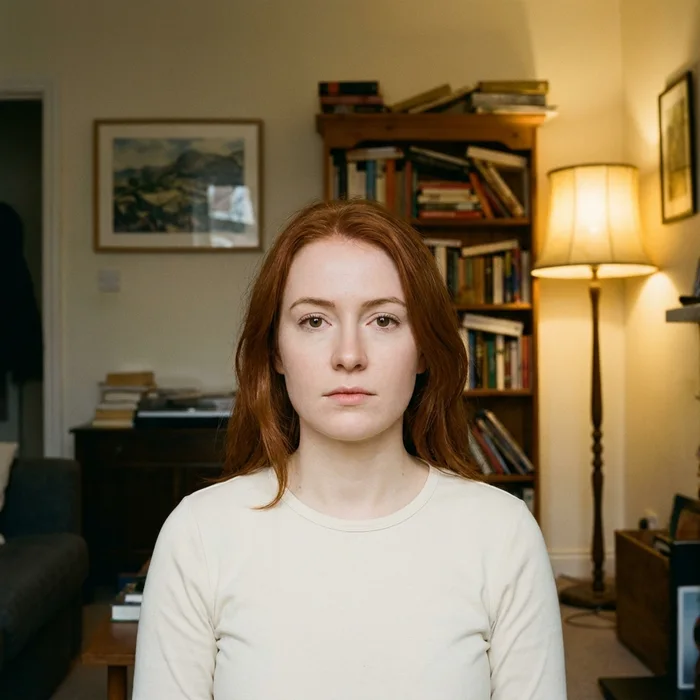
✓Illustrative examples — the people shown are AI-generated.
Why the background is the most common failure
People concentrate on their face and forget the wall. A doorframe at the edge of the frame, the corner where two walls meet, a picture hook, a radiator — all of these are objects, and objects are not permitted.
Colour casts are the subtler version. A magnolia wall photographed under warm indoor bulbs reads as cream or yellow; a white wall lit by a nearby lamp picks up its temperature. Neither looks wrong to you at the time, and both can read as a non-white background to a reviewer.
This is the one requirement our pipeline removes entirely rather than assessing. Your background is replaced with the required plain color, so what you were standing in front of stops mattering — a bookshelf, a busy kitchen, a car park. What it cannot undo is a shadow already falling across your face.
White, off-white, and what those mean
The US specification says white or off-white. Off-white means a very light neutral — the sort of shade a plain wall painted white actually photographs as. It does not mean cream, beige, pale gray or eggshell blue.
Not every country wants white. France explicitly refuses white backgrounds and requires light gray. The Netherlands and the UK also expect a light gray or cream tone. If you are producing photos for more than one country, the background color is the thing most likely to differ.
Shadows count as background failures
A shadow on the wall behind your head is treated the same as an object: it makes the background not plain. The cause is almost always standing too close to the wall with a light source in front of you.
The fix costs nothing. Stand two to three feet in front of the wall rather than against it, and the shadow falls out of frame or diffuses away. Face a window on an overcast day and there is barely a shadow to cast.
The related failure is a shadow on your own face, usually from overhead ceiling lights pooling under the eyes and nose. That one cannot be fixed after the fact by any software, because the information is lost.
Check your photo against this rule — free
Upload a photo and read the full report on all eleven requirements before paying anything.
Check my photoFrequently asked
What color background does a US passport photo need?+
Plain white or off-white, evenly lit, with no objects, patterns or shadows behind you.
Can I use a white wall at home?+
Usually yes, if you stand about two feet in front of it so your shadow does not land on it and the light is even. Our processing replaces the background regardless.
Can I use a white sheet or a bedsheet?+
Yes, if it is smooth and hangs without creases. Creases show as lines and can read as a pattern.
Is a gray background allowed in the US?+
No. Grey is required in France and accepted in several other countries, but the US specification asks for white or off-white.
Can the background be edited afterwards?+
Yes, and it is standard practice — what is not permitted is editing your face. We replace the background and leave your pixels untouched.