30% off today$16.95 $11.86·ends tonight
☰✕
Documents
US passport photo2×2 inUSCIS photoGreen card photoUS visa photoDigital photoonline renewalBaby passport photoRequirements
US passport photo requirementsPhoto examples that passFree photo checkerSize & dimensionsBackground rulesGlassesGuides
All passport & visa guidesHow long it actually takes to get a passportRenewing your passport by mail, step by stepApplying for your first passportExpedited passports, honestly explainedWhat a passport actually costsHow it works
How we verifyPricing$11.86Where to get oneMoney-back guaranteeUSCIS Photo Requirements
Short answer
USCIS uses the same photo specification as the State Department: 2 × 2 inches, head between 1 and 1⅜ inches, plain white background. The one difference that matters: USCIS forms ask for a photo taken within the last 30 days, where the State Department allows six months.
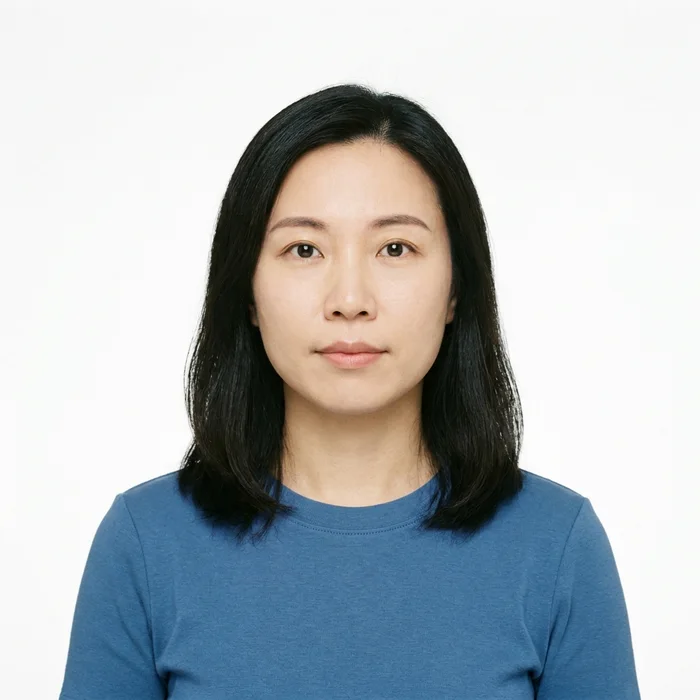 ✓
✓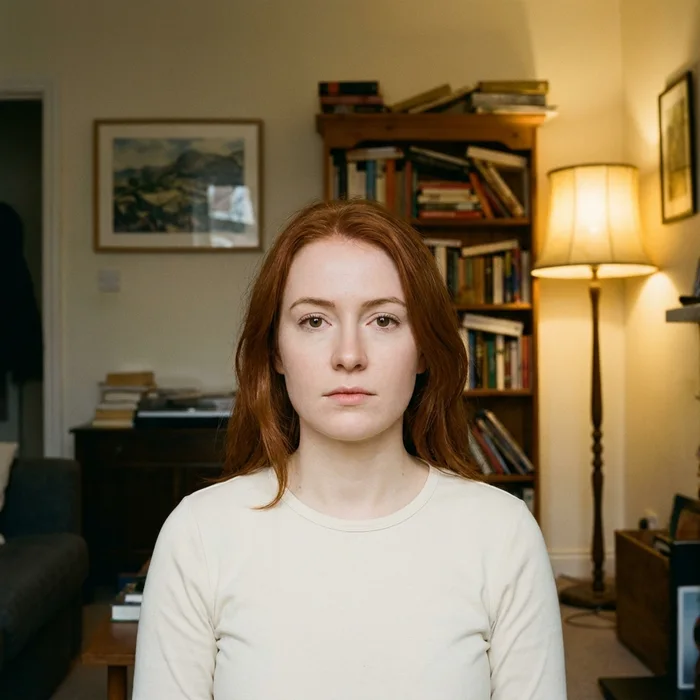 ✕
✕See all 10 examples
The specification
| Size | 2 × 2 inches (51 × 51 mm), square |
| Head height | 1 to 1⅜ inches from chin to top of hair |
| Background | Plain white or off-white, evenly lit |
| Expression | Neutral or natural closed-mouth smile, both eyes open |
| Glasses | Not permitted |
| Recency | Taken within the last 30 days |
One specification, many forms
This is the part that saves people money. USCIS does not publish a different photo standard for each application — the same 2 × 2 inch photo satisfies naturalisation (N-400), green card renewal (I-90), adjustment of status (I-485), employment authorisation (I-765), advance parole (I-131) and travel documents.
It is also the same specification the State Department uses for passports, which means a compliant passport photo is a compliant USCIS photo. If you are doing both — and many people applying for citizenship renew a passport soon after — one photo session covers both.
What varies between forms is how many prints you send and where you write your A-number, not what the photo looks like.
Writing on the back
Several USCIS forms ask you to write your name and A-number lightly in pencil on the reverse of each photo, or on the envelope holding them. Read your specific form instructions rather than assuming.
If you do write on the back, use a soft pencil and almost no pressure. A ballpoint pen presses an indentation through to the front of the print, and a photo with a visible ridge across the face is refused — which is a genuinely common and avoidable rejection.
Digital or printed
Most USCIS paper filings need printed photos. Some online filings accept an uploaded digital photo instead, and the online portal applies automated checks on dimensions and file size at upload.
You receive both from us: a 1200 × 1200 pixel digital file and a 6 × 4 inch sheet at 600 dpi holding two photos at exactly 2 × 2 inches, which any photo kiosk prints for around 35¢.
What passes and what gets refused
Photos that pass
✓ PassesAcceptable
Even frontal lighting, no shadows on the face or the wall, plain white background, neutral expression with the mouth closed, and a mid-tone top that separates cleanly from the background.
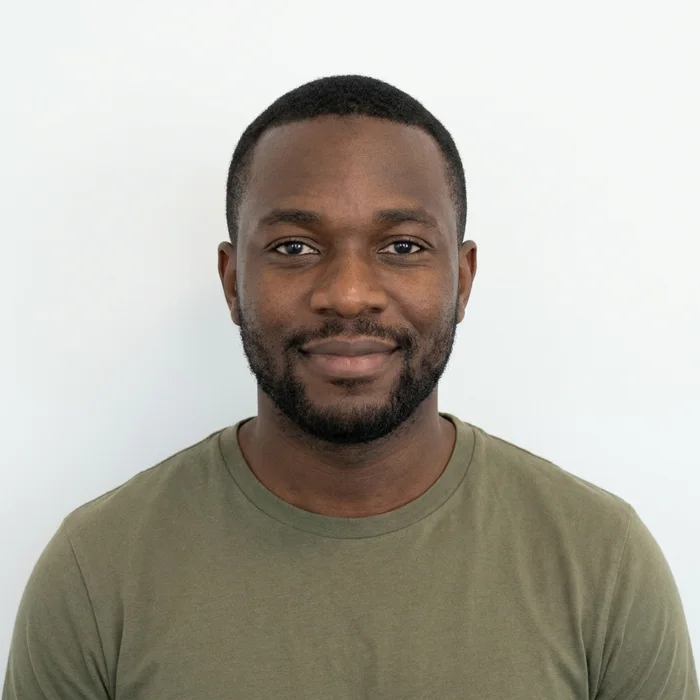
✓ PassesAcceptable
A relaxed, closed-mouth smile is fine — the rule is about teeth and exaggeration, not about looking stern. Lighting is even and the background is plain.
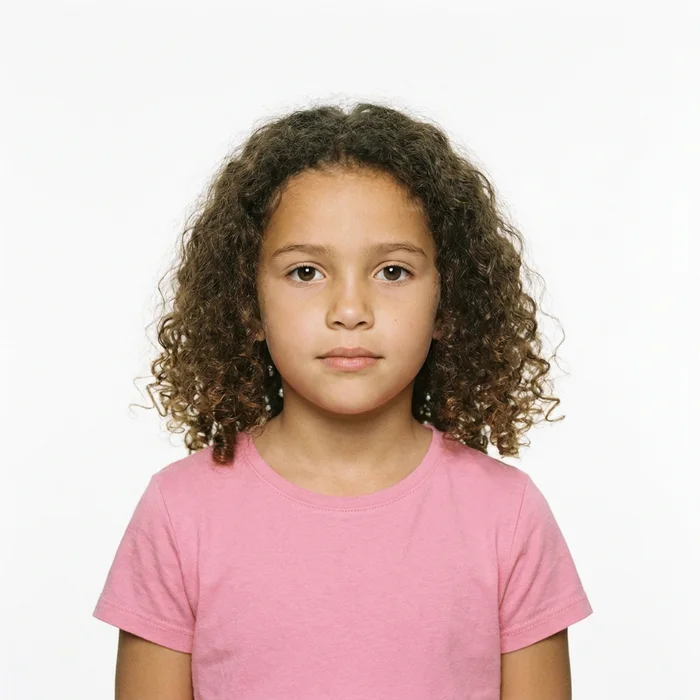
✓ PassesAcceptable
Children follow the same rules as adults once they can sit unsupported: eyes open, facing the camera, plain background, nobody else in the frame.
Photos that get refused
✕ RefusedNot accepted — background
The single most common rejection. A bookshelf, lamp and picture frame are all visible, and the warm indoor light has tinted the wall. The background must be plain white or off-white with nothing behind you.
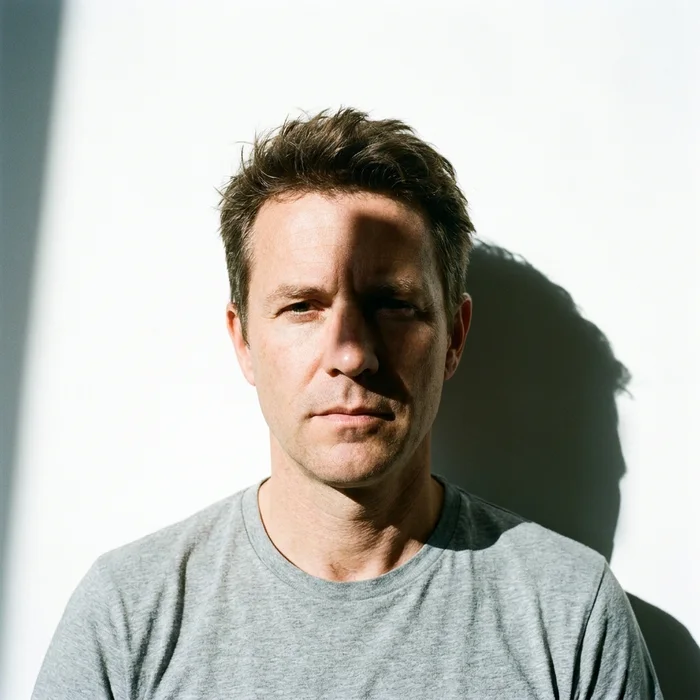
✕ RefusedNot accepted — shadows
Harsh side lighting has thrown a shadow across half the face and a second one onto the wall behind. Both are refused. Face a window on an overcast day, or stand well away from the wall.
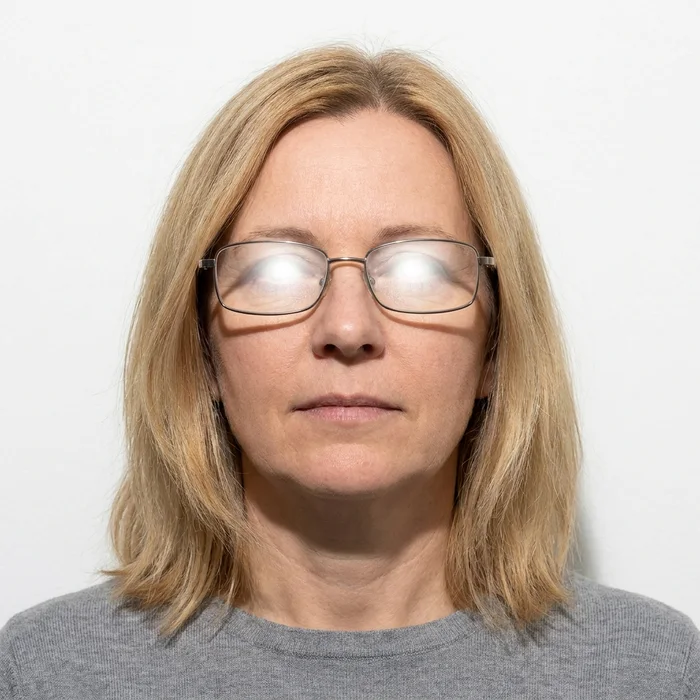
✕ RefusedNot accepted — glasses
Glasses have not been permitted in US passport photos since November 2016, and here the glare is obscuring both eyes anyway — which would fail even in countries that do allow them.

✕ RefusedNot accepted — expression
A broad open-mouthed smile with teeth showing, and the eyes have narrowed from smiling. Biometric matching needs a neutral face with both eyes clearly open.
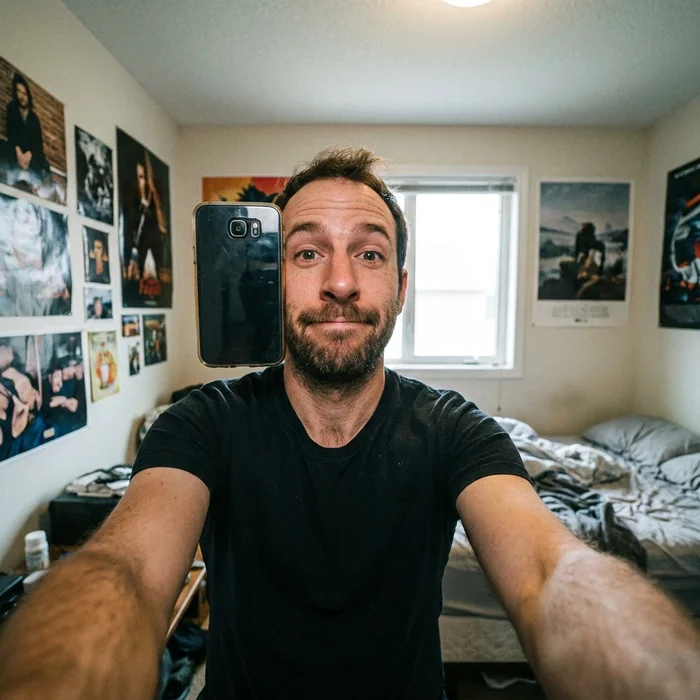
✕ RefusedNot accepted — arm's-length selfie
The phone is far too close, so the nose and forehead are enlarged by lens distortion, and the outstretched arm is in shot. This is why the official checklist says no selfies. Shoot from about six feet instead.
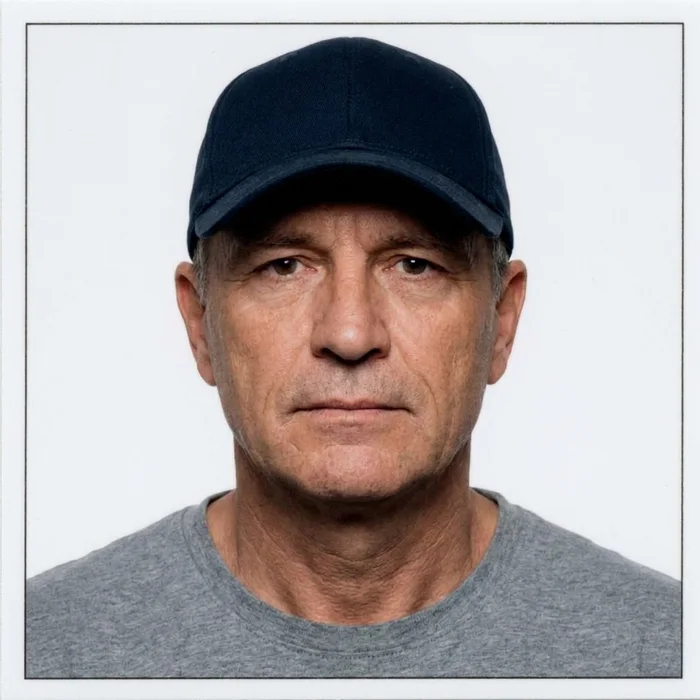
✕ RefusedNot accepted — head covering
Hats are refused outright. Head coverings are permitted only for religious or medical reasons, with a signed statement, and must never shadow the face as this cap does.
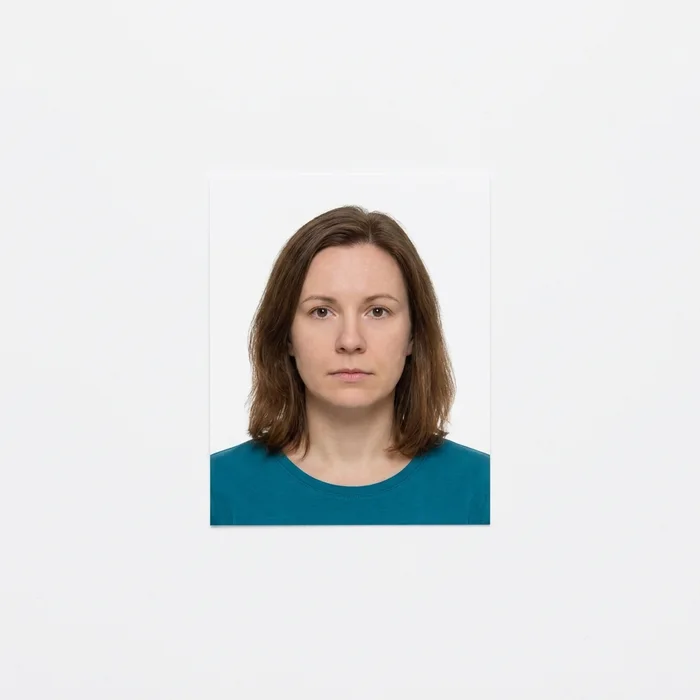
✕ RefusedNot accepted — head too small
Framed too loosely, so the head measures well under the required 1 to 1⅜ inches. Too small is far more common than too large, because people instinctively step back.
Illustrative examples — the people shown are AI-generated.
Make one now — checked before you pay
Your uscis photo, measured against all eleven requirements before you pay. You get a 1200 × 1200 digital file and a printable 4 × 6 sheet for $11.86 — and nothing is charged until it passes.
Check my photo freeFrequently asked
What size photo does USCIS require?+
2 × 2 inches, with the head measuring 1 to 1⅜ inches from the bottom of the chin to the top of the hair — identical to a US passport photo.
Can I use my passport photo for USCIS?+
Only if it was taken within the last 30 days. The geometry is identical, but USCIS form instructions ask for a photo from the last 30 days while the State Department allows six months — so an older passport photo will not do.
Do I write my A-number on the photo?+
Several forms ask for it in pencil on the reverse. Use very light pressure — a pen indentation showing through the front is grounds for rejection.
How many photos does USCIS need?+
Usually two, but check your specific form. Our print sheet holds two at the correct size.
Can I wear glasses in a USCIS photo?+
No. Glasses have not been permitted since 2016, matching the State Department rule.